

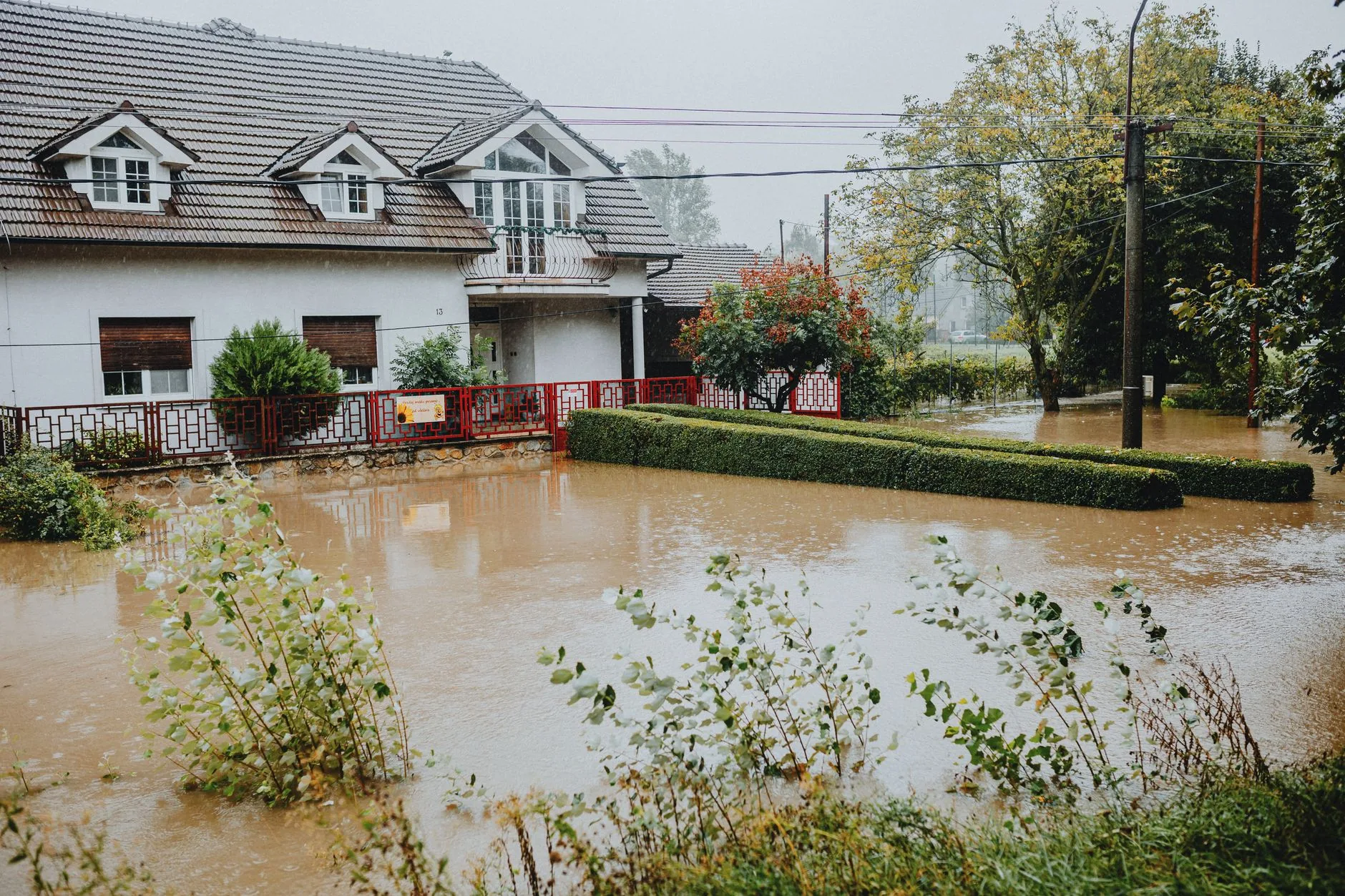
Most South Florida homeowners believe they’re covered for water damage. They have a homeowners policy, they pay it every month, and they assume that if a storm pushes water into the house, the policy pays. Then the water comes — from a king tide, a stalled thunderstorm, a canal that jumped its bank, or a hurricane’s surge — and they learn the hard way that a standard homeowners policy specifically excludes flood damage.1
It is one of the most consequential gaps in personal finance, and it is almost entirely invisible until the day it matters. Flooding is the most common and costly natural disaster in the United States, and nowhere is the exposure higher than in low-lying, coastal South Florida. Yet flood coverage is a separate policy that you have to choose to buy — and, crucially, one you generally can’t buy at the last minute once a storm is on the map.
This guide lays out the whole picture for a Broward County reader: why your homeowners policy won’t pay, what actually counts as a “flood,” the two ways to buy flood insurance and what each covers, the waiting period that makes timing everything, how prices are set now, and the single most expensive myth in the whole subject — “I’m not in a flood zone, so I don’t need it.”
Key takeaways
- A standard homeowners policy excludes flood damage — flood is a separate policy you buy on purpose.1
- Federal NFIP coverage caps residential policies at $250,000 for the building and $100,000 for contents; private flood policies can go higher.1
- A new NFIP policy typically has a 30-day waiting period before it takes effect — you cannot buy it as a storm approaches.2
- More than 40% of NFIP flood claims come from outside high-risk flood zones — “not in a flood zone” does not mean “no flood risk.”3
- Even in a forecast “below-normal” season, it only takes one storm — and the peak weeks (mid-August through mid-October) are just ahead.6
1. Why your homeowners policy won’t pay for a flood
Start with the fact that catches almost everyone off guard: a standard homeowners insurance policy in Florida does not cover damage from flooding. Flood is a named exclusion, right alongside things like earth movement. Your policy may cover other kinds of water damage — a burst pipe, a roof torn open by wind that lets rain in — but water that rises from outside and enters your home is a different category, and it’s carved out.1
That distinction — wind-driven rain versus rising water — is where a lot of post-storm disputes live. If a hurricane rips shingles off and rain pours through the hole, that’s typically a wind claim under your homeowners policy. If that same hurricane pushes a storm surge or dumps enough rain that water flows across the ground and into your house, that’s a flood, and only a flood policy pays for it. The same storm can produce both, which is exactly why South Florida homeowners so often need both kinds of coverage.
“But I have great homeowners insurance”
The quality of your homeowners policy is irrelevant to flood. A premium, top-tier homeowners policy still excludes rising-water flood damage. This isn’t a gap you can close by upgrading your homeowners coverage — it can only be closed with a separate flood policy.
2. What actually counts as a “flood”
In insurance terms, a flood is generally a temporary overflow of normally dry land by water — and it usually has to affect at least two acres or two or more properties to qualify. That definition matters, because it’s broader than the hurricane-surge image most people have in their heads. In South Florida, the water that damages homes often has nothing to do with a named storm at all:
- Heavy rainfall. A slow-moving summer thunderstorm can drop several inches of rain in an hour — more than the drainage can handle — and flood streets and homes without any tropical system involved.
- Storm surge. A hurricane or tropical storm can push ocean water inland, one of the most destructive forms of coastal flooding.
- King tides and sea-level rise. South Florida’s low elevation and porous limestone mean seasonal high tides can push water up through storm drains and into streets, even on a sunny day.
- Canal and drainage overflow. The region’s vast network of canals is designed to move water out — but during extreme rain, that system can back up.
The takeaway: you don’t need to live on the beach, and you don’t need a hurricane, to experience a flood that a homeowners policy won’t touch.

3. Two ways to buy flood insurance: NFIP vs. private
There are two main channels for flood coverage, and it’s worth understanding both because the right answer depends on your home, your budget, and how much coverage you actually need.
The National Flood Insurance Program (NFIP)
The NFIP is a federal program run by FEMA. For decades it has been the backbone of flood coverage in the U.S., and policies are sold through participating private insurers and agents. Its pricing and rules are set federally, and its coverage amounts are capped: for a residential property, a maximum of $250,000 on the building and $100,000 on contents.1 For many modest homes those limits are enough; for higher-value homes they can leave a gap above the cap.
Private flood insurance
A growing private flood-insurance market now competes with the NFIP. Private policies are underwritten by private insurers and can, in many cases, offer higher coverage limits than the NFIP caps, sometimes broader features, and in some cases shorter waiting periods. Whether a private policy is available — and cheaper or better — than an NFIP policy depends on the specific property. For homes above the NFIP caps, or where a private carrier prices the risk more favorably, the private market is well worth comparing.
| NFIP (federal) | Private flood | |
|---|---|---|
| Coverage limits | Up to $250k building / $100k contents (residential) | Often higher limits available |
| Availability | Widely available in participating communities | Depends on carrier appetite for the property |
| Waiting period | Typically 30 days for a new policy | Sometimes shorter, varies by carrier |
| Pricing basis | FEMA’s Risk Rating 2.0, by property | Carrier’s own models |
| Backing | Federal program | Private insurer |
4. What flood insurance covers — and its limits
Flood insurance is generally split into two coverages you can buy together, and it helps to know the line between them — especially for what lives in your basement, garage, or ground floor.
- Building coverage pays for the physical structure and its systems — foundation, electrical and plumbing, HVAC, water heaters, built-in appliances, permanently installed cabinetry and flooring, and the like.
- Contents coverage pays for your personal belongings — furniture, clothing, electronics, and other movable items. It’s purchased separately, so a building-only policy would leave your possessions uncovered.
Two details matter for South Florida homes. First, coverage in below-ground or ground-level areas is limited — flood policies restrict what they’ll pay for finished space and belongings kept low in the home. Second, flood policies generally do not cover things like temporary living expenses while your home is repaired, or damage to landscaping and pools. Knowing these edges in advance keeps a claim from becoming a second surprise.
5. The 30-day waiting period: why timing is everything
If you remember one operational fact from this article, make it this one: a new NFIP flood policy generally does not take effect the day you buy it. There is typically a 30-day waiting period from the date you purchase until coverage begins.2 That rule exists to stop people from buying flood insurance only when a storm is already bearing down — which is precisely why you can’t treat flood coverage as a last-minute purchase.
Picture the timeline. A tropical system enters the Gulf or the Atlantic, the cone goes up, and South Florida rushes to prepare. If you try to buy an NFIP policy that week, it won’t be in force when the storm arrives — the 30-day clock won’t have run. The protection has to be in place before there’s anything on the map. That’s the entire reason this article is published in July, ahead of the season’s peak, rather than in September when everyone is watching the tropics.
“Flood insurance is one of the few financial decisions where the calendar matters more than the forecast. By the time a storm has a name, the window to buy coverage for it has usually already closed.”
There are narrow exceptions — for example, the waiting period generally doesn’t apply when flood insurance is required in connection with making, increasing, or renewing a loan, such as at a home purchase closing.2 Private flood policies sometimes carry shorter waiting periods as well. But the safe assumption for a homeowner shopping on their own is simple: buy early, and don’t wait for a threat.

6. How flood insurance is priced now (Risk Rating 2.0)
FEMA overhauled how NFIP premiums are calculated with a system called Risk Rating 2.0. Under the old approach, your premium leaned heavily on which broad flood-zone your property sat in. Under Risk Rating 2.0, flood zones are no longer the basis for the premium; instead, pricing is built from the specific characteristics of your individual property — things like distance to water, flood types, and the cost to rebuild your home.4
The practical implications are worth understanding:
- Your quote is about your home, not just your zone. Two houses on the same street can price differently based on their individual risk factors.
- Being outside a high-risk zone doesn’t mean a token price. Because pricing reflects real risk, it also means low- and moderate-risk properties often qualify for relatively modest premiums — frequently far less than people expect for the peace of mind involved.
- Comparing matters more than ever. With NFIP pricing individualized and a private market pricing on its own models, the only way to know your real options is to get quotes from both channels.
7. “I’m not in a flood zone”: the costly myth
This is the belief that leaves more South Florida families exposed than any other. People check whether their property is in a FEMA high-risk flood zone (a Special Flood Hazard Area), find that it isn’t, and conclude they don’t need flood insurance. The data says otherwise. Nationwide, more than 40% of NFIP flood insurance claims come from properties outside high-risk flood areas.3
That figure makes sense once you remember what causes flooding here. Drainage gets overwhelmed. Rain falls faster than the ground and canals can move it. A moderate- or low-risk designation on a FEMA map describes a probability, not a guarantee — and it says nothing about the freak storm that parks over your neighborhood for three hours. In a place as flat, low, and rain-prone as South Florida, “not in a high-risk zone” is a reason to price a policy, not to skip one.
Low-risk can mean lower-cost — not no-need
Here’s the upside of that myth: if your home is in a moderate- or low-risk area, flood coverage is often surprisingly affordable, precisely because the premium reflects the lower risk. So the same fact people use to justify skipping coverage is often the reason it’s cheap enough to justify buying it. It costs nothing to get a quote and find out.
8. The 2026 wrinkle: NFIP’s deadline and the season’s peak
Two timing factors make the summer of 2026 a particularly good moment to get this handled.
The NFIP’s authorization deadline
The National Flood Insurance Program operates under an authorization from Congress that has to be periodically renewed. The current authorization is set to expire on September 30, 2026 unless Congress reauthorizes it.5 In practice, Congress has repeatedly extended the program, and existing policies generally remain in force even during a lapse — but a lapse can complicate the issuance of new policies and add uncertainty right in the middle of hurricane season.5 One more reason not to leave a new policy until the last minute: put coverage in place now, well before both the deadline and the peak.
The season’s most dangerous weeks are ahead
Hurricane season runs June 1 through November 30, but the activity is heavily concentrated: historically, storms most frequently affect Florida from mid-August through mid-October, with the statistical peak around early-to-mid September.6 Even in a season forecast to be “below normal,” as NOAA has outlined for 2026, that outlook describes the number of storms, not your personal risk — it still only takes one storm reaching your neighborhood to cause a flood.6 A quiet forecast is not a reason to skip coverage; it’s a reason to get it in place while there’s still time for the waiting period to run.
9. A South Florida lens
A few things make the flood-insurance question sharper here than almost anywhere else:
- Low, flat, and porous. Broward County’s elevation and limestone geology mean water has nowhere easy to go. Flooding from rain and tides is a routine reality, not a rare event.
- Value above the caps. As home values have risen, more properties sit above the NFIP’s $250,000 building cap — which makes comparing a private policy, or adding excess coverage, more important than it used to be.
- Renters and belongings. Flood insurance isn’t just for owners. Renters can buy contents coverage to protect their belongings, since a landlord’s policy won’t cover a tenant’s possessions.
- Language matters. Flood policies, waiting periods, and coverage limits are confusing in any language. We walk clients through it in English, French, Creole, and Spanish, so the decision is made in the language you think in.
One team, four languages
Flood cover comes from a property agent. The rest, we can help with.
JCKC handles ACA / Obamacare health plans, life insurance, Medicare, tax preparation and notary services — in English, French, Creole or Spanish.
10. Your step-by-step action plan
- Confirm your gap today. Pull out your homeowners policy (or ask your agent) and confirm what everyone eventually learns: flood is excluded. Now you know the gap is real.
- Understand your home’s risk. Check your flood-zone designation — but treat “low-risk” as a pricing signal, not a reason to skip. Remember the 40%-plus of claims from outside high-risk zones.
- Get quotes from both channels. Compare an NFIP policy and any available private flood options. Weigh coverage limits (especially if your home is above $250k), price, and waiting period.
- Buy early — before there’s a storm on the map. Because of the typical 30-day waiting period, coverage has to be in place well ahead of any threat. July and early August are the time; September is too late for that season’s first storm.
- Match your coverage to what you own. Make sure you have both building and contents coverage if you need both, and understand the limits on ground-level and below-ground areas.
- Review it every year. As home values, risk, and the program itself change, revisit your coverage annually — ideally in the spring, before the next season.
11. Frequently asked questions
Doesn’t my homeowners insurance cover flooding?
No. A standard homeowners policy specifically excludes damage from flooding — rising water that enters your home from outside. It may cover other water damage, like a burst pipe or rain entering through a wind-damaged roof, but flood is a separate policy you have to buy on purpose.
How much flood insurance can I get?
Through the federal NFIP, a residential policy covers up to $250,000 for the building and up to $100,000 for contents, purchased separately. Private flood insurers can often offer higher limits, which matters for homes valued above the NFIP caps.
Can I buy flood insurance when a hurricane is coming?
Generally no — and this is the most important timing rule. A new NFIP flood policy typically has a 30-day waiting period before it takes effect, so a policy bought as a storm approaches won’t be in force when it hits. There are narrow exceptions (such as flood insurance required at a loan closing), but the safe approach is to buy well before any threat.
I’m not in a flood zone. Do I really need it?
It’s worth strongly considering. More than 40% of NFIP flood claims come from outside high-risk flood zones. In low-lying, rain-prone South Florida, a moderate- or low-risk designation describes a probability, not a guarantee — and coverage in those areas is often quite affordable precisely because the risk is lower.
How is flood insurance priced?
For NFIP policies, FEMA now uses Risk Rating 2.0, which prices based on the specific characteristics of your individual property — not just the broad flood zone it sits in. Private insurers use their own models. Because pricing is individualized, comparing quotes from both channels is the only way to know your real options.
Can JCKC sell me a flood policy?
No. JCKC does not offer flood or homeowners insurance. A flood policy comes from a property insurance agent, or directly through the NFIP. We wrote this guide because the gap it describes catches South Florida families out every season, and because the households we do help with health, life and Medicare coverage are usually the same ones carrying it.
Where JCKC fits — and where it does not
JCKC Financial Services is an independent brokerage based in Broward County. We help South Florida families with the financial side of life — ACA / Obamacare health plans, life insurance, Medicare, tax preparation and notary services — in English, French, Creole and Spanish.
We do not sell flood or homeowners insurance. For a flood policy you will work with a property insurance agent, or go directly through the NFIP at floodsmart.gov. We published this guide anyway, because the gap it describes is one of the most expensive surprises in this region and nobody should learn about it from a claim denial.
If you would like help working out who to call, or you want to review the coverage we do handle, get in touch or call (954) 825-9923 — in the office, online, or in the language you are most comfortable with.
12. Sources
- FEMA. Flood Insurance — what’s covered and coverage limits (National Flood Insurance Program). fema.gov/flood-insurance
- Electronic Code of Federal Regulations. 44 CFR § 61.11 — Effective date of coverage / 30-day waiting period. ecfr.gov/current/title-44/…/section-61.11
- FEMA FloodSmart. Why buy flood insurance — flood claims outside high-risk areas. floodsmart.gov/why/why-buy-flood-insurance
- FEMA. NFIP’s Pricing Approach (Risk Rating 2.0). fema.gov/flood-insurance/risk-rating
- National Association of REALTORS®. FAQ: National Flood Insurance Program Expiration / Reauthorization. nar.realtor/flood-insurance/faq-national-flood-insurance-program-expiration
- NOAA. NOAA predicts below-normal 2026 Atlantic hurricane season (season dates and peak). noaa.gov/news-release/noaa-predicts-below-normal-2026-atlantic-hurricane-season
- Florida Department of Financial Services (MyFloridaCFO). Flood insurance consumer information for Florida homeowners. myfloridacfo.com/division/consumers
Disclaimer: JCKC Financial Services is a licensed independent insurance brokerage that also provides tax preparation and notary services. We are not a government agency and are not affiliated with FEMA or the National Flood Insurance Program, and we are not a law firm and do not provide legal advice. Flood insurance program rules, coverage limits, waiting periods, and pricing are set by federal law, FEMA, and individual insurers and may change; the figures here reflect program terms described for 2026 and may be revised. This article is general information only and is not legal, tax, financial, or insurance advice or a substitute for guidance from a licensed professional about your specific situation.