

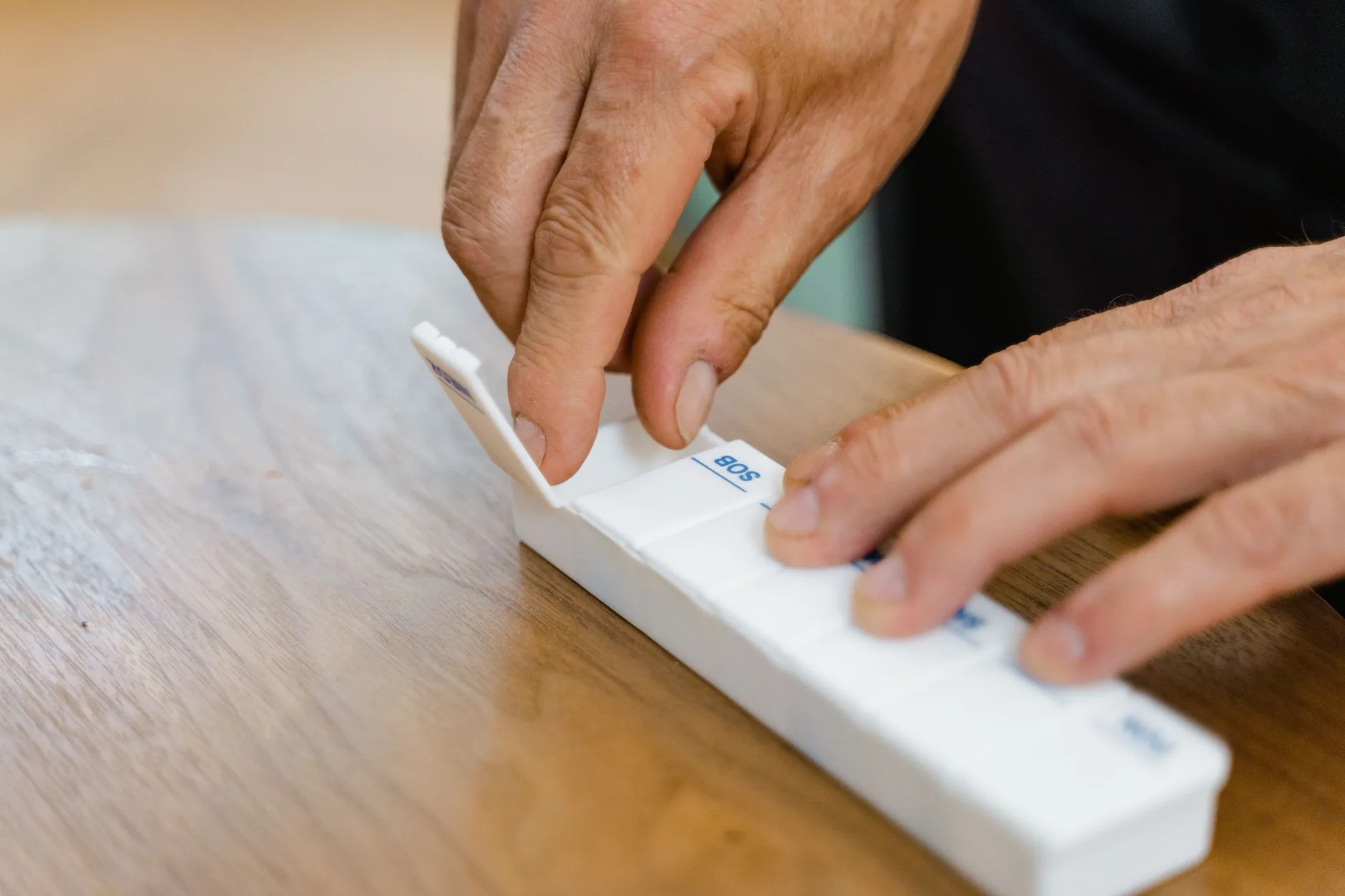
1. What the payment option actually is
The Medicare Prescription Payment Plan is a way of paying for the drugs your Part D coverage already covers. Instead of handing money to the pharmacy each time you collect a prescription, you hand over nothing, and your plan sends you a monthly bill for what you owe. Anyone with a Medicare drug plan, or a Medicare Advantage plan that includes drug coverage, can use it. Every plan has to offer it, taking part is voluntary, and there is no charge to join.1
It is not new, but it is still unfamiliar to most people, and this is the first Annual Enrollment in which plans have been marketing it heavily alongside 2027 coverage. The mechanics are simple enough once you see them laid out. The question nobody puts on the brochure is whether it does anything for you, and for a surprising number of people the honest answer is no.2
2. The sentence that is usually left out
Here is the sentence, from Medicare’s own fact sheet, printed twice in the same document because they clearly expect it to be missed: this payment option “might help you manage your monthly expenses, but it doesn’t save you money or lower your drug costs.” Not a discount. Not a subsidy. A calendar.1
The arithmetic behind that is worth stating plainly, because it is what makes the whole thing honest. Across a single calendar year you will never pay more than the total you would have paid at the pharmacy anyway, and never more than the out-of-pocket maximum for covered Part D drugs, which is $2,400 in 2027, up from $2,100 in 2026. That cap applies to everybody with Medicare drug coverage, whether or not they use this option. The payment plan does not change the ceiling. It changes the shape of the climb.3
Two bills, and one of them matters more
Your monthly plan premium and your Medicare Prescription Payment Plan bill arrive separately. Medicare’s instruction on the order is unambiguous: pay the plan premium first, every time. Missing a payment-plan bill removes you from the payment option. Missing a premium can cost you the drug coverage itself.
3. How the monthly bill is worked out
All plans use the same formula, which is set by Medicare rather than by the insurer, so there is nothing to shop around for here. It works in two steps.1
- The first month you take part is capped at what Medicare calls your “maximum possible payment”: the annual out-of-pocket maximum, less anything you have already spent this year, divided by the number of months left including the current one. Starting in January 2027 with nothing spent, that is $2,400 divided by 12 — $200. Your plan bills you that figure or your actual cost for the month, whichever is smaller.
- Every month after that is the balance you have not yet been billed for, plus whatever new costs you ran up, divided by the months remaining in the year. That is why the bill moves: a new prescription in July has fewer months left to spread across than the same prescription in February.
Two consequences follow from the second rule, and both catch people out. Your payment is not a fixed monthly figure and cannot be quoted to you in advance. And payments tend to rise through the year rather than fall, because each new fill is divided across a shrinking number of months.
4. A full year in 2027 dollars
Medicare publishes a worked example, and it is the clearest thing in the whole fact sheet. Somebody with $600 a month of out-of-pocket drug costs joins in January 2027. The table below is that example, recalculated here from the published formula rather than copied, so you can see every month of the year at once.1
| Month | What you would pay at the pharmacy | What the payment option bills you |
|---|---|---|
| January | $600 | $200.00 |
| February | $600 | $90.91 |
| March | $600 | $150.91 |
| April | $600 | $217.58 |
| May | $0 | $217.58 |
| June | $0 | $217.57 |
| July | $0 | $217.58 |
| August | $0 | $217.57 |
| September | $0 | $217.58 |
| October | $0 | $217.57 |
| November | $0 | $217.58 |
| December | $0 | $217.57 |
| Total for the year | $2,400 | $2,400 |
Look at the two totals. They are the same number, and that number is the 2027 cap. The person in this example reaches $2,400 in April and adds no new out-of-pocket drug costs for the rest of the year — but they keep paying about $218 a month through December, because they are still working off what they owe. That is the honest trade: four hard months at the counter become twelve even ones. If paying $600 in January is the problem, this fixes the problem. If it is not, this gives you a bill in September for drugs you collected in March.
5. Who it genuinely helps
Medicare’s own guidance is specific about who gains: you are most likely to benefit if you have high drug costs early in the calendar year. That is the whole case. A January or February bill large enough to make you hesitate at the counter is exactly what this is designed to absorb.1
There is a second group worth naming, which the fact sheet gestures at rather than states. If there is a drug you have been prescribed and have not started because the first fill is unaffordable, this option can make the first month survivable. Not cheaper — survivable. Over a year you will pay the same, but you will have the medication. For somebody choosing between a prescription and a utility bill in January, that is not a small distinction.
Fifteen minutes, no charge, nothing to sign
Bring your drug list and your plan letter. We will tell you whether this option would change anything for you.
6. The seven situations where it is the wrong choice
This is the part worth reading twice, because it is Medicare telling you not to bother. The fact sheet lists seven situations in which the payment option “may not be the best choice for you”:1
- Your yearly drug costs are low. There is nothing meaningful to spread.
- Your drug costs are the same each month. A flat $40 a month is already spread across the year; routing it through a second bill changes nothing.
- You are considering signing up late in the year — Medicare says after September. Too few months remain for the division to help.
- You do not want to change how you pay for your drugs. Plainly put, and fair: this replaces a familiar transaction at a counter with a bill in the post.
- You get or are eligible for Extra Help. Your copays are already capped at a few dollars.
- You get or are eligible for a Medicare Savings Program. Same reasoning.
- You get help from another source — a State Pharmaceutical Assistance Program, a manufacturer coupon, or other coverage.
Three of those seven point at the same thing, and it is the point of the next-but-one section: if you qualify for help that actually reduces what you owe, take that first. Rescheduling a bill is a poor substitute for shrinking it.
7. What happens if you miss a payment
This is the question we are asked most, and the answer is more forgiving than people expect. If you miss a payment your plan sends a reminder. If you do not pay by the date in the reminder you are removed from the payment option — but you stay enrolled in your Medicare health or drug plan, and your coverage continues.1
You still owe the money. What you do not owe is anything extra: Medicare states that you will not pay interest or fees even if your payment is late, and that you can clear the balance in one payment or carry on being billed monthly. If you think your plan has billed you wrongly, the grievance process in your plan’s Evidence of Coverage is the route, and it is worth using rather than paying a figure you do not recognise.
If both bills are a struggle, the answer is not this option
Medicare’s advice when somebody cannot comfortably pay both the plan premium and the payment-plan bill is not to adjust the payment plan. It is to check whether you qualify for Extra Help or a Medicare Savings Program. Those lower what you owe. This only moves it.
8. Leaving, and what a plan switch does to it
You can leave at any time by telling your plan, and leaving has no effect on your drug coverage or any other Medicare benefit. The balance you have built up is still yours to pay, in one go or monthly, and from the day you leave you go back to paying the pharmacy directly for anything new.1
One thing to know during Annual Enrollment, because it catches people every January. If you change plans, your participation ends. It does not transfer to the new plan, and the new plan will not start it for you automatically — you have to ask them. So if you are comparing 2027 plans between now and December 7 and you are currently using this option, add one line to your checklist: call the new plan in January and ask to join again.4
9. The programs that do lower the cost
If what you actually need is a smaller number rather than a later one, these are the programs that produce it. All of them are free to apply for, and all of them are worth more than a payment schedule.
- Extra Help. The federal subsidy for Part D costs. For somebody who qualifies it means a $0 drug plan premium, a $0 deductible, and copays capped at $5.80 for a generic and $14.40 for a brand-name drug in 2027. The application goes through Social Security and costs nothing.
- Medicare Savings Programs. State-run, and they can pay some or all of your Medicare premiums, deductibles and coinsurance. Applying for one also starts an Extra Help application unless you opt out.
- State Pharmaceutical Assistance Programs. Where they exist they can cover drug plan premiums or cost sharing, and what they pay on your behalf may count toward your $2,400 out-of-pocket limit.
- Manufacturer assistance programs. Run by drug companies for specific medications. Worth asking about by name when a single drug is driving your costs.
Medicare’s own line on this is that many people qualify for savings and do not realise it. We see that every week. If you are anywhere near the limits, apply rather than assume — and we will sit down and work out where you fall before you file anything.5
10. A South Florida lens
The people this option is aimed at are not evenly spread across South Florida. Palm Beach County has 149,600 people in stand-alone Part D drug plans, against 85,738 in Broward and 78,335 in Miami-Dade, because Palm Beach is the one county of the three where Original Medicare still outnumbers Medicare Advantage: 192,500 against 177,865. Stand-alone drug plan members are the group most exposed to a bad January, and the group for whom this option was really written.6
The Extra Help picture runs almost exactly the other way. Miami-Dade has 234,316 people already receiving Extra Help, nearly 45 percent of its Medicare population; Broward has 92,958 and Palm Beach 54,066, under 15 percent. For most of that Miami-Dade group the payment option is the wrong tool and the subsidy they already hold is the right one. For a lot of Palm Beach households, the opposite. It is a genuinely local answer, which is why a national article cannot give it to you.7
11. What to do before December 7
You do not have to decide this during Annual Enrollment — you can join at any point in the year. But two of these steps have a December 7 deadline attached, so the order matters.
- Work out your real monthly drug spend first, month by month. Not the annual total. The shape of the year is the only thing that determines whether this option helps, and a flat line means it does not.
- Check Extra Help and the Savings Programs before anything else. If you qualify, that is the conversation, and this one becomes irrelevant.
- Choose your 2027 plan on total annual cost, not on this. The payment option is identical at every plan because the formula is federal. It is never a reason to pick one plan over another.
- Enrol in your plan by December 7. That deadline is real and it does not move.
- If you use the option now and you are switching plans, diary a call for January. Your participation ends with the old plan and the new one will not restart it unless you ask.
- If you join, start early in the year. January gives you twelve months to spread across. October gives you three.
12. Frequently asked questions
Does the Medicare Prescription Payment Plan save me money?
No, and Medicare says so in plain words: it “doesn’t save you money or lower your drug costs.” It is a payment option, not a discount. Over a full calendar year you pay exactly what you would have paid at the pharmacy counter, capped at the same $2,400 out-of-pocket maximum that applies to everyone with Part D coverage in 2027. What changes is the month the money leaves your account.
Who actually benefits from it?
People with high drug costs early in the year. If you face $600 at the counter in January and $600 again in February, this option turns that into $200 and then about $91 while the rest is spread forward. If your drug costs are low, or the same every month, you are shifting small amounts around for no gain — and Medicare lists both of those situations among the reasons it may not be the right choice for you.
Do I still pay my plan premium?
Yes, separately. Your monthly plan premium and your Medicare Prescription Payment Plan bill are two different bills. Medicare is blunt about the order of priority: always pay the plan premium first, because missing that is what puts your drug coverage itself at risk.
When can I sign up for 2027?
Any time during the calendar year — you do not have to wait for Annual Enrollment, and you do not have to decide during it. But the earlier in the year you start, the more months there are to spread costs across, and Medicare specifically warns that signing up after September leaves too little of the year to be useful. Once you are in, your plan renews your participation automatically each year unless you change plans or opt out.
How is the monthly bill worked out?
Your first month is capped at the annual out-of-pocket maximum minus anything you have already spent, divided by the months left in the year — for a January start in 2027 that is $2,400 divided by 12, or $200. The plan bills you the lesser of that figure and what you actually owe. Every month after that is your unpaid balance plus the new costs, divided by the months remaining. All plans use the same formula.
What happens if I miss a payment?
You get a reminder first. If you do not pay by the date in that reminder you are removed from the payment option, but you keep your drug coverage and you still owe the balance. Medicare is clear that there is no interest and no late fee, and that you can settle the balance in one payment or keep being billed monthly.
Can I leave once I have joined?
Yes, at any time, by contacting your plan. Leaving does not affect your Medicare drug coverage. You still owe whatever balance has built up, and from that point you go back to paying the pharmacy directly for anything new.
What happens if I switch Part D or Advantage plans for 2027?
Your participation ends with the old plan. It does not follow you. If you want the payment option with your new plan you have to ask the new plan for it — which is worth knowing now, in the middle of Annual Enrollment, because a switch you make before December 7 will quietly cancel it.
I get Extra Help. Should I use this?
Probably not, and Medicare lists getting or being eligible for Extra Help among the reasons this may not be the right choice. Extra Help already caps your copays at $5.80 for a generic and $14.40 for a brand-name drug in 2027, so there is very little left to spread. Spreading $14.40 across eleven months is not a plan. If you are eligible and not enrolled, that application is worth far more to you than this payment option — apply through Social Security.
Does this change the $2,400 cap?
No. The $2,400 out-of-pocket maximum for 2027 applies to everyone with Medicare drug coverage whether or not they use this payment option. The cap is the law; the payment option is only a way of scheduling what you owe underneath it.
13. Sources
- Centers for Medicare & Medicaid Services. What’s the Medicare Prescription Payment Plan? CMS Product No. 12211, September 2026 — how the option works, the statement that it does not save money or lower drug costs, the monthly bill formula, the worked examples in 2027 dollars, the seven situations in which it may not be the best choice, what happens on a missed payment, and what a plan change does to participation. Read October 16, 2026. medicare.gov — CMS Product No. 12211
- Centers for Medicare & Medicaid Services. Medicare Prescription Payment Plan — the program page, including the requirement that all Part D plans offer the option. cms.gov — Medicare Prescription Payment Plan
- Medicare.gov. Medicare drug coverage costs — the out-of-pocket maximum on covered Part D drugs of $2,100 in 2026 and $2,400 in 2027, the maximum deductible, and what counts toward the cap. medicare.gov — Part D costs
- Medicare.gov. Joining a plan — the Annual Enrollment Period of October 15 to December 7 and the Annual Notice of Change your plan sends by September 30. medicare.gov — joining a plan
- Medicare.gov. Help with drug costs — the Extra Help income and resource limits, the 2027 copayments of $5.80 for a generic and $14.40 for a brand-name drug, Medicare Savings Programs, State Pharmaceutical Assistance Programs and manufacturer assistance programs. medicare.gov — help with drug costs
- Centers for Medicare & Medicaid Services. Medicare Monthly Enrollment, June 2026 — county-level beneficiary counts, stand-alone Part D enrollment, Original Medicare and Medicare Advantage enrollment, and Extra Help counts for Broward, Miami-Dade and Palm Beach. Read October 12, 2026. data.cms.gov — Medicare monthly enrollment
- Medicare.gov. Medicare Prescription Payment Plan — the consumer hub, including the questionnaire that estimates whether you are likely to benefit. medicare.gov/prescription-payment-plan
Disclaimer: JCKC Financial Services is a licensed independent insurance brokerage that also provides tax preparation and notary services. We are not connected with or endorsed by the U.S. government or the federal Medicare program. The rules of the Medicare Prescription Payment Plan, the Part D out-of-pocket maximum and deductible, and the Extra Help and Medicare Savings Program limits are set by federal law and CMS and are subject to change; the figures here reflect amounts published as of October 2026 for the 2027 plan year. The worked example is Medicare’s own, recalculated from the published formula, and is an illustration rather than a quotation of what you would pay. Your own costs depend on your drugs, your plan and your pharmacy, and should be confirmed with your plan or on Medicare.gov before you rely on them. This article is general information only and is not legal, tax, financial or insurance advice, or a substitute for guidance from a licensed professional about your specific situation.